The best time to book a Colombia Coffee Region tour
There is no dry season you can count on in the Coffee Region, only drier and wetter stretches. The drier spells give firmer trails in the Cocora Valley, while the harvest weeks put more red cherries on the coffee bushes. Holiday weeks fill Salento fast, so they shape the plan as much as the weather does.
Rain is possible in any month
The Coffee Region sits high in the Colombian Andes, and the hills around Salento stay green because it rains often. No stretch of the year is reliably dry, so a rain layer belongs in your bag whatever dates you pick.
What changes through the year is how often the showers come. In most years there are two drier spells, roughly December to February and June to August. The wetter months tend to fall around April and May, then again around October and November.
These are broad patterns, not a forecast. A drier month can still bring a soggy week, and a wet month can hand you a clear morning in the Cocora Valley. Our pick, the Gran Colombia private day, runs in all weather according to its listing.
| Stretch of the year | Weather, roughly | On the coffee farms | Crowds in Salento |
|---|---|---|---|
| December to February | One of the drier spells | Main harvest winding down | Very busy from Christmas into early January |
| March | Changeable | Green fruit, full process shown | Easter week busy when it falls here |
| April to May | Wetter, muddier trails | Smaller mitaca harvest begins | Easter week busy when it falls here |
| June to August | The second drier spell | Mitaca on some farms into June | Long weekends and school breaks |
| September | Changeable | Fruit ripening | Quieter |
| October to November | Wetter, muddier trails | Main harvest under way | Quieter apart from long weekends |
What the drier spells change on the trail
The Cocora Valley walk crosses open pasture and forest paths that turn to thick mud after heavy rain. In the drier months the ground is firmer underfoot, so you spend less time watching your feet and more looking up.
Clear air matters as much as dry ground. The Quindío wax palms can grow to about 60 m (200 ft), and their crowns often sit in cloud. Drier weeks give better odds of seeing them against open sky, though mist can drift in on any day.
Our step-by-step guide to the Cocora Valley walk covers the route the tours follow and how muddy it gets. It also explains why boots matter more than anything else in the wetter months.
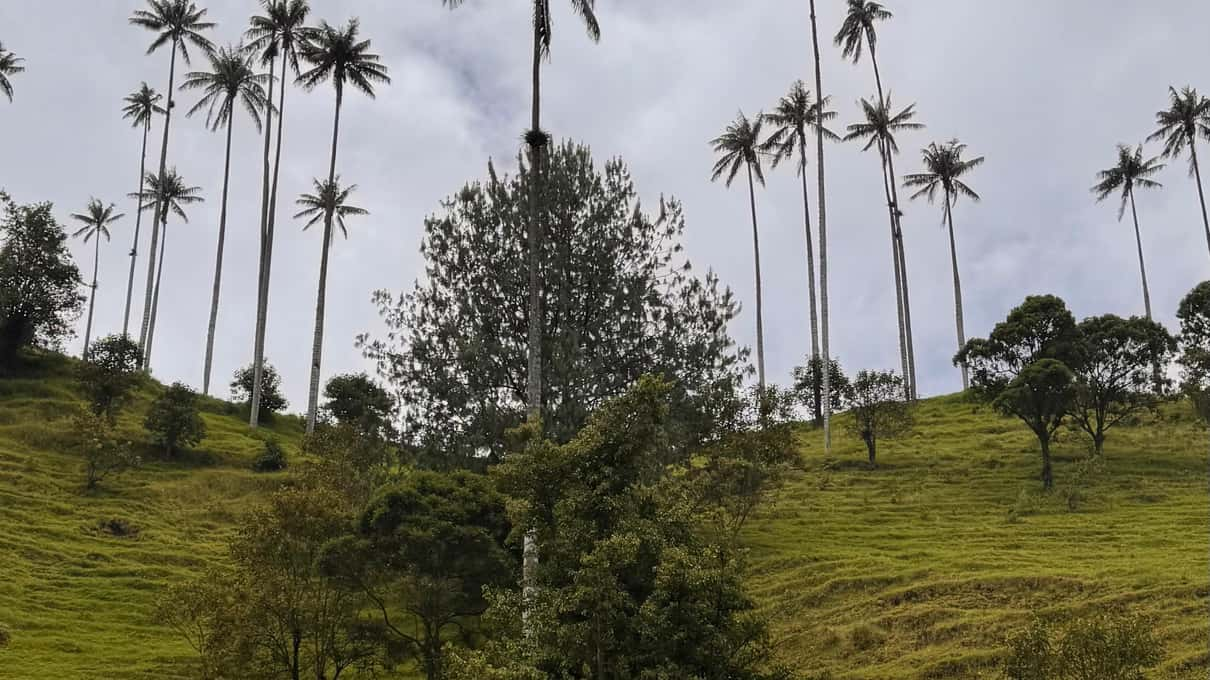
Mornings tend to be clearer
As a general pattern, mornings in the valley are often clearer, with cloud and showers building through the afternoon. It is a tendency rather than a rule, and plenty of afternoons stay bright while some mornings start grey.
That pattern favors a tour that walks the valley first. The Ruta Xplorer day from ~$107 starts at 9:00 am, reaches the valley after about 30 minutes by car and spends roughly three hours walking there.
Lunch on that tour is optional and costs extra, so plan to pay for it yourself in Salento. The coffee farm and the town come in the afternoon, when a passing shower is easier to shrug off than on a slippery hillside.
The valley first, coffee after lunch
Ruta Xplorer walks the Cocora Valley for about three hours from a 9:00 am start, then visits a coffee farm and Salento. GetYourGuide shows 4.9 from 100+ reviews, Viator only 5, and the pickup depends on the option you choose.
Harvest weeks on the coffee farms
Coffee in the region ripens in two waves. The main harvest falls roughly from October to December, and a smaller second one, the mitaca, comes around April to June. The timing shifts from farm to farm with altitude.
During the harvest the bushes carry more red cherries, and farm tours have more for you to pick. The shared farm tour from ~$60 has you planting seedlings and picking cherries, and ripe fruit makes the picking part fuller.
Outside those weeks the farms still show the whole process, from seedlings to roasting. You see more green fruit on the branches than red. Our guide to choosing a coffee farm compares the three ways to visit one.
Two goals pull in different directions. Red cherries point you toward roughly October to December, firmer trails toward December to February, so December sits in both, give or take a few weeks. It is also the busiest month in Salento.
Holiday weeks fill Salento
Colombians travel in large numbers over the Christmas holidays, which run into early January, and again over Easter week. Salento is a small town, so rooms and tour places go quickly in those weeks.
Long weekends bring the same rush on a smaller scale. Colombia moves many public holidays to a Monday, and families from the cities head for the hills. Look at the Colombian holiday calendar before you fix your dates.
If you travel then, book as soon as your plans are firm. The listings we read offer free cancellation up to 24 hours before, so an early booking costs little flexibility. Our price comparison of the six tours shows what each one charges.
A busy day also means a fuller shared group. On a private trip such as the Gran Colombia private day from ~$176, the valley is just as full, but your own group stays the same size. The page on private or group tours covers the other differences.
Mild days through the year
Temperatures barely change across the seasons. Daytime in Salento, at about 1,900 m (6,200 ft), is roughly 18–22 °C (64–72 °F) in most months, and evenings turn cool once the sun drops.
The valley entrance is higher, at about 2,400 m (7,900 ft), and feels colder, especially under cloud or after rain. Bring a warm layer even in the drier spells. Our packing list for mud and rain covers the rest of the bag.
Fitting a tour into your stay
Book the Cocora Valley day early in your stay rather than on your last morning. If heavy rain hides the palms, you then have room to try again or to swap the day for a farm visit.
Two or three nights in the area give that room. A short farm visit, like the 1.5-hour Finca El Ocaso tour from ~$22, fits into a wet afternoon without taking a whole day.
If you are flying in, read how to get to Salento before you book anything. Where you sleep changes the length of the day, and our page on where to base yourself compares the towns.